
How Incineration Helps Prevent ASF & Other Emerging Diseases
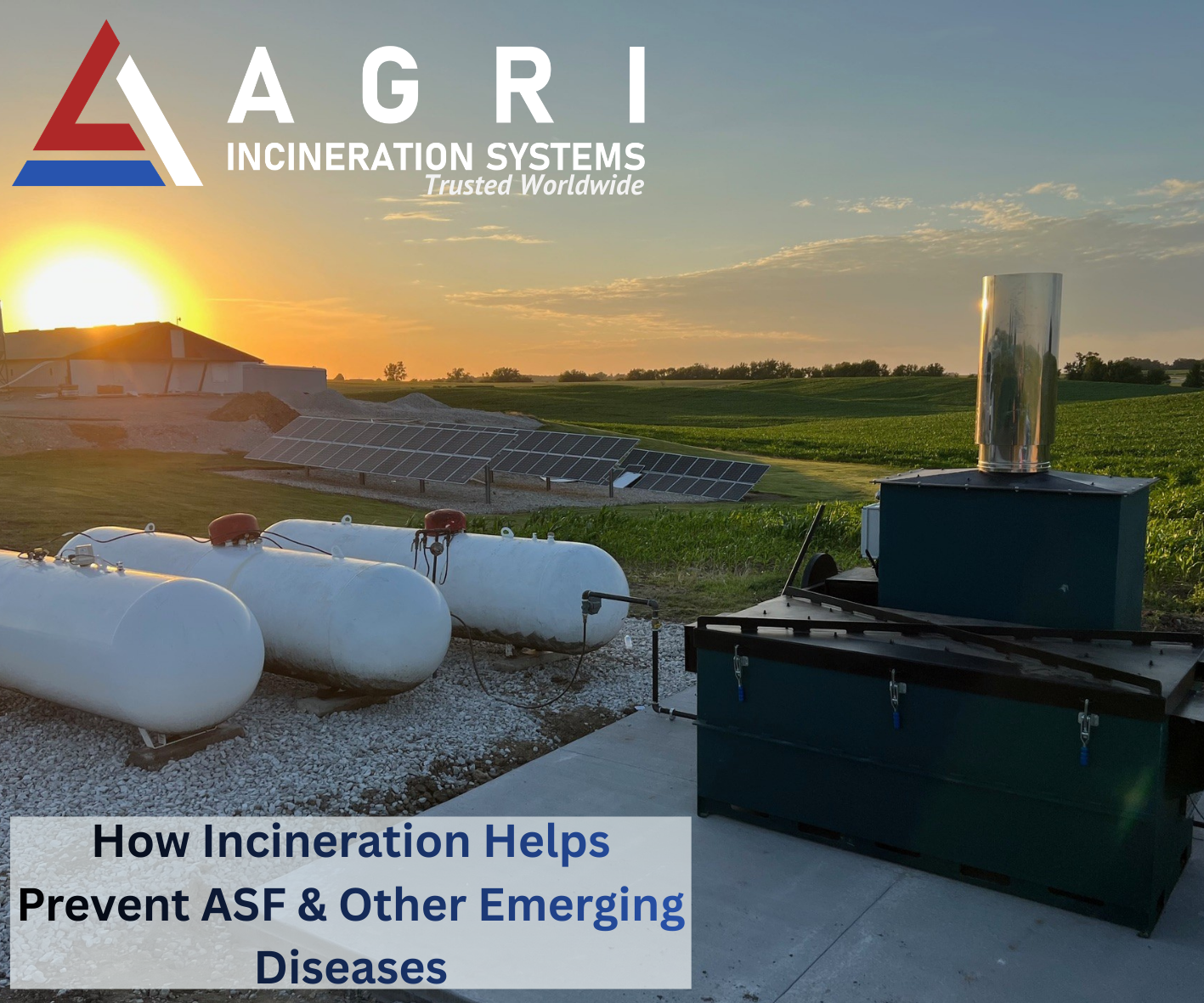
Why thermal destruction — when engineered correctly — strengthens biosecurity infrastructure
As global disease pressure continues to intensify — particularly with the ongoing threat of African swine fever (ASF) — mortality management has shifted from a routine chore to a strategic biosecurity decision.
Forward-thinking pork producers are no longer evaluating disposal strictly on cost. They are asking a more important question: Does our mortality system eliminate pathogens with certainty? For many, modern on-farm incineration — particularly dual-chamber systems engineered for livestock production — is becoming part of that answer.
Disease Destruction Temperatures: Engineering for Certainty
ASF and other emerging pathogens are known for their resilience in organic material. In infected tissue, viruses can persist if not fully neutralized. Agri Incinerators designs agricultural incineration systems with primary and secondary combustion chambers capable of operating between 1112°F and 2012°F. This dual-chamber configuration ensures:
- Complete combustion of organic material
- Secondary burn of gases and particulates
- Consistent temperature control
- Reduction of tissue to sterile ash
At these temperatures, viral proteins, bacteria, and parasitic organisms are structurally destroyed — not simply contained. Temperature certainty removes the variability often associated with environmental or passive disposal methods.
Why Thermal Disposal Outperforms Composting and Landfill
Active Pathogen Destruction — Composting can reduce pathogen loads when carefully managed, but it depends on moisture levels, carbon ratios, pile construction, and proper turning to achieve adequate internal heat. Even then, uneven distribution can create survival pockets. Landfill and burial isolate material but do not actively neutralize pathogens. By contrast, Agri Incinerators' controlled burn process applies sustained, measurable heat in an enclosed environment — delivering consistent pathogen destruction cycle after cycle.
Biosecurity & Traffic Reduction — External hauling introduces vehicles, personnel, and cross-site exposure risk. By eliminating the need for third-party carcass pickup, producers reduce external traffic and maintain tighter perimeter biosecurity — a critical factor in ASF preparedness planning.
Wildlife & Scavenger Risk Reduction — Exposed mortalities, compost piles, or delayed removal can attract birds, rodents, and scavengers — all potential mechanical vectors capable of moving contaminated material beyond the farm boundary. An enclosed, high-temperature incineration system eliminates exposed tissue rapidly and fully, removing attractants and strengthening perimeter integrity.
Built for Long-Term Biosecurity Infrastructure
Disease preparedness is not a temporary initiative — it is ongoing infrastructure. Agri Incinerators systems are engineered with durability and fuel efficiency in mind, allowing producers to maintain optimized burn rates, reduce fuel consumption, extend equipment life, and operate reliably in high-volume livestock environments. This combination of engineering performance and pathogen destruction capability positions thermal incineration not just as disposal equipment — but as part of a broader biosecurity framework.
Final Perspective
When evaluating mortality systems, the question becomes clear: does your current process destroy pathogens — or does it rely on environmental variables? For operations seeking greater certainty in a world of emerging diseases, engineered thermal incineration offers measurable advantages in pathogen elimination, biosecurity reinforcement, and operational resilience.
See the full article on Swineweb.com here: Link.