How Agri Incineration Systems is Redefining Farm Biosecurity and Waste Management
1. What are the primary benefits of using incineration over traditional methods for animal mortality management?
Incineration offers several benefits over traditional methods like burial, composting, or rendering for managing animal mortalities:
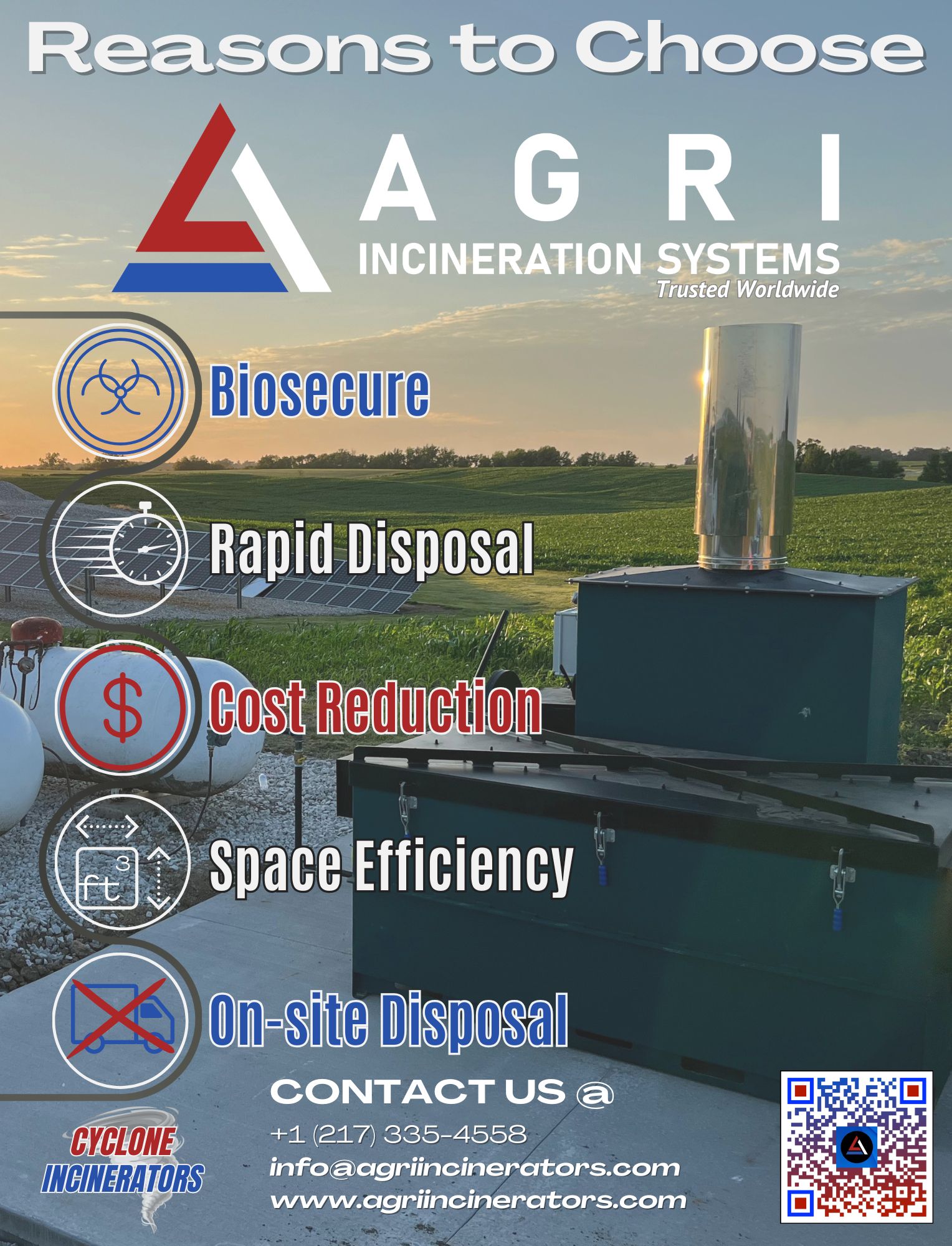
- Disease Control — Incineration provides a high level of biosecurity because it effectively destroys pathogens, including bacteria and viruses that can survive in soil and potentially spread through water or air in traditional disposal methods.
- Environmental Protection — Properly managed incineration prevents potential soil and groundwater contamination, which can be an issue with composting.
- Reduced Odor and Waste Volume — Incineration significantly reduces the volume of waste and eliminates odor. Ash produced by incineration is sterile and can be disposed of easily.
- Efficiency and Speed — Compared to composting or decomposition in burial, incineration is a faster process. It allows animal mortalities to be handled and disposed of quickly.
- Controlled Process — Our incinerators are a more controlled method, allowing temperature and emissions to be regulated.
2. How has incinerator technology evolved to better meet the needs of modern farming operations?
- Material Innovation — Our modern incinerators use only concrete (never brick) for the primary structure. High-grade refractory concrete withstands high temperatures while offering better durability and thermal efficiency.
- Enhanced Secondary Combustion Chambers — The large secondary chambers (which come as standard on every one of our machines) allow for more complete combustion, reducing emissions.
- Pulse-Fired Burners — Pulse-fired burners improve temperature control and fuel efficiency by firing in controlled bursts rather than running continuously.
- Automated Controls and Monitoring — Our incinerators come equipped with automation and digital monitoring systems that regulate temperature, airflow, and burner operation.
3. What are some common misconceptions about incineration, and how do modern designs address these concerns?
Many assume incinerators emit visible smoke. In our range, large secondary combustion chambers ensure complete combustion, effectively burning off residual particulates before release. Concerns about odor are addressed by correctly sized secondary chambers, where gases pass through an additional high-temperature zone that breaks down odor-causing compounds. Pulse-fired burner technology and advanced controls keep fuel use efficient.
4. In what ways does incineration enhance biosecurity on farms?
- Pathogen Destruction — Incineration effectively eliminates bacteria, viruses, fungi and even prions due to the high temperatures reached during combustion.
- Reduced Attractants for Pests and Scavengers — Unlike composting or burial, incineration completely destroys animal remains.
- Minimized Cross-Contamination Risks — Incineration takes place in a controlled environment, greatly reducing the risk of disease transmission through soil or water.
- Immediate Disposal in Crisis Situations — During disease outbreaks, incineration allows for the quick disposal of infected or deceased animals.
- On-Farm Disposal Reduces External Contact — On-site disposal avoids the need for external transport and minimises contact with other farms.
5. Can incinerators effectively manage large volumes of waste, and what options exist for various farm sizes?
Yes — with 21 different models in our lineup, we are well-equipped to meet the needs of various farm sizes, from smaller daily mortality rates to significant waste loads during periods of higher mortality or disease outbreaks.
6. How does Agri Incineration Systems (AIS) support farmers in the USA?
AIS supports US farmers with a comprehensive service network — distributors with spare parts, highly trained engineers for repairs, ongoing maintenance support, training for farm operators, and customizable service plans.
See the full article on Swineweb.com here: Link.